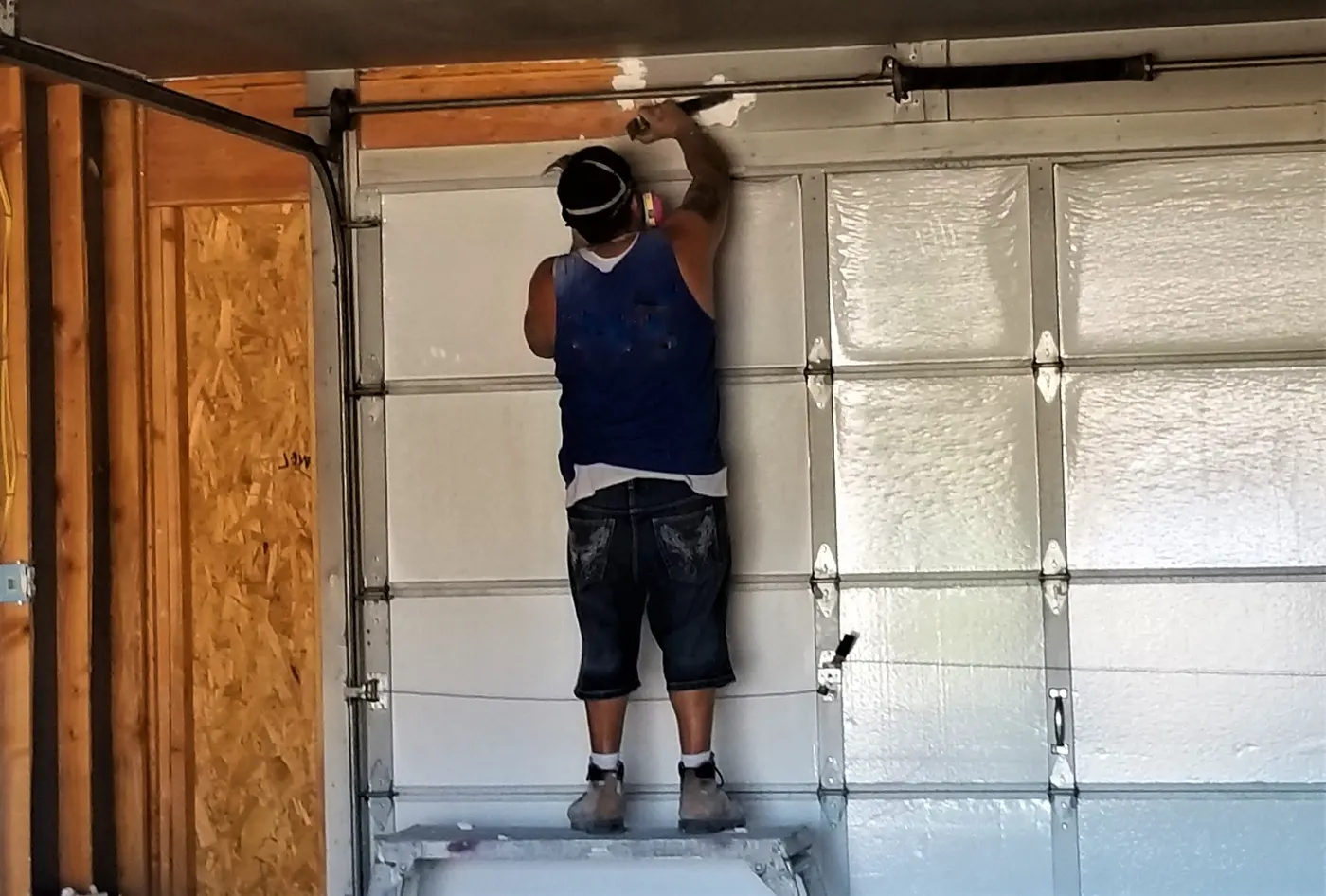
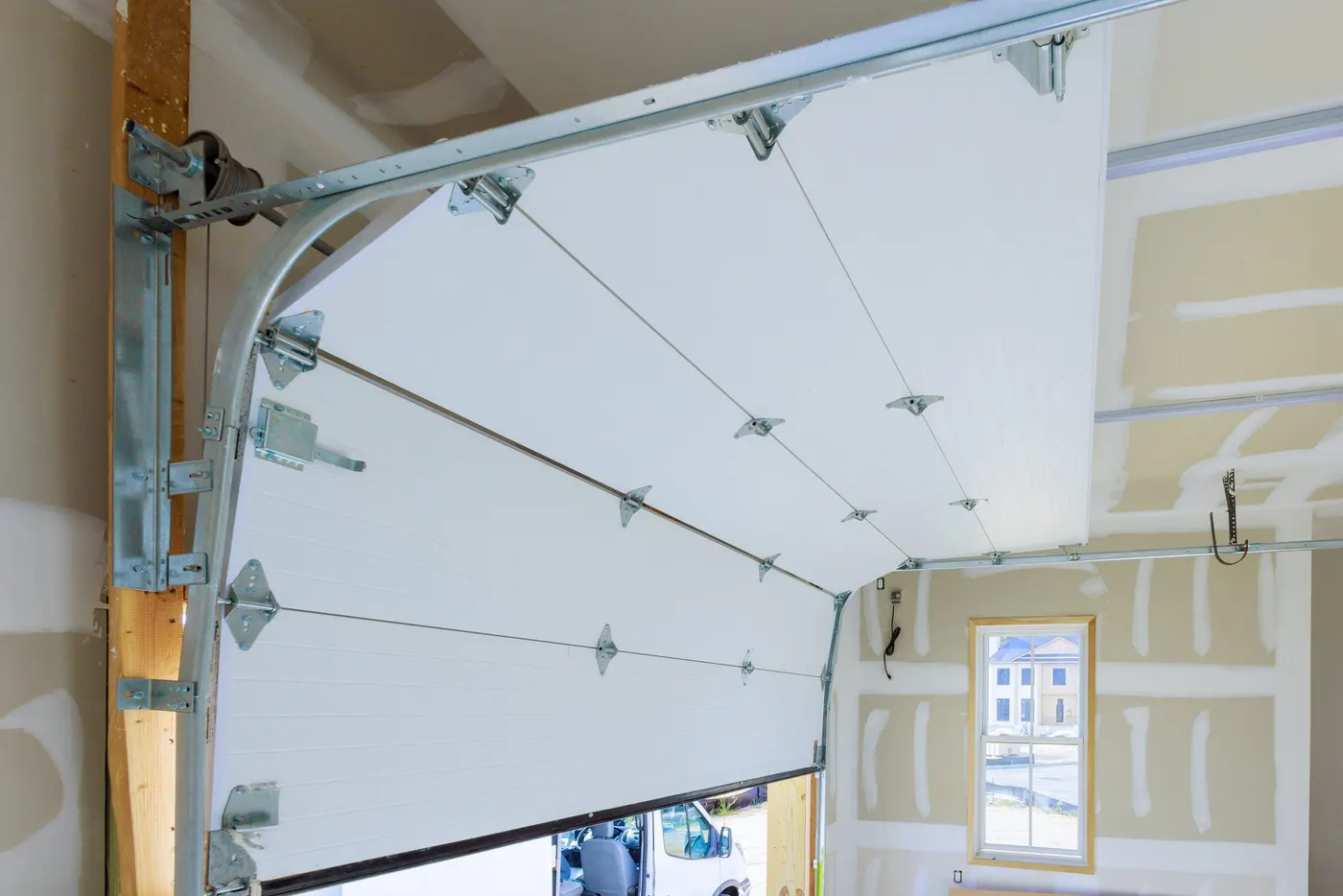
If you stand inside the garage and watch the door move, you’ll see rollers on each section riding up the vertical track, around the curve, and back along the horizontal track toward the ceiling. That path needs to be clean, aligned and firmly anchored. Small problems with it—a worn roller, a loose bracket, a dent in the track—show up as noise, vibration and eventually a door that binds or comes off.
We repair and replace residential garage door track and rollers around Merton, from simple roller upgrades that make an old door noticeably quieter to straightening or replacing track damaged by a car bumper.
Rollers, track and hinges: how they work together
Each roller sits in a hinge or bracket on the edge of a door section. The roller’s wheel rides inside the track while its stem slides in the hinge as the door curves. The track is held by brackets fastened to the jambs (vertical track) and to the ceiling or framing (horizontal track). If any one of those parts is worn or out of position, the rollers can’t move freely.
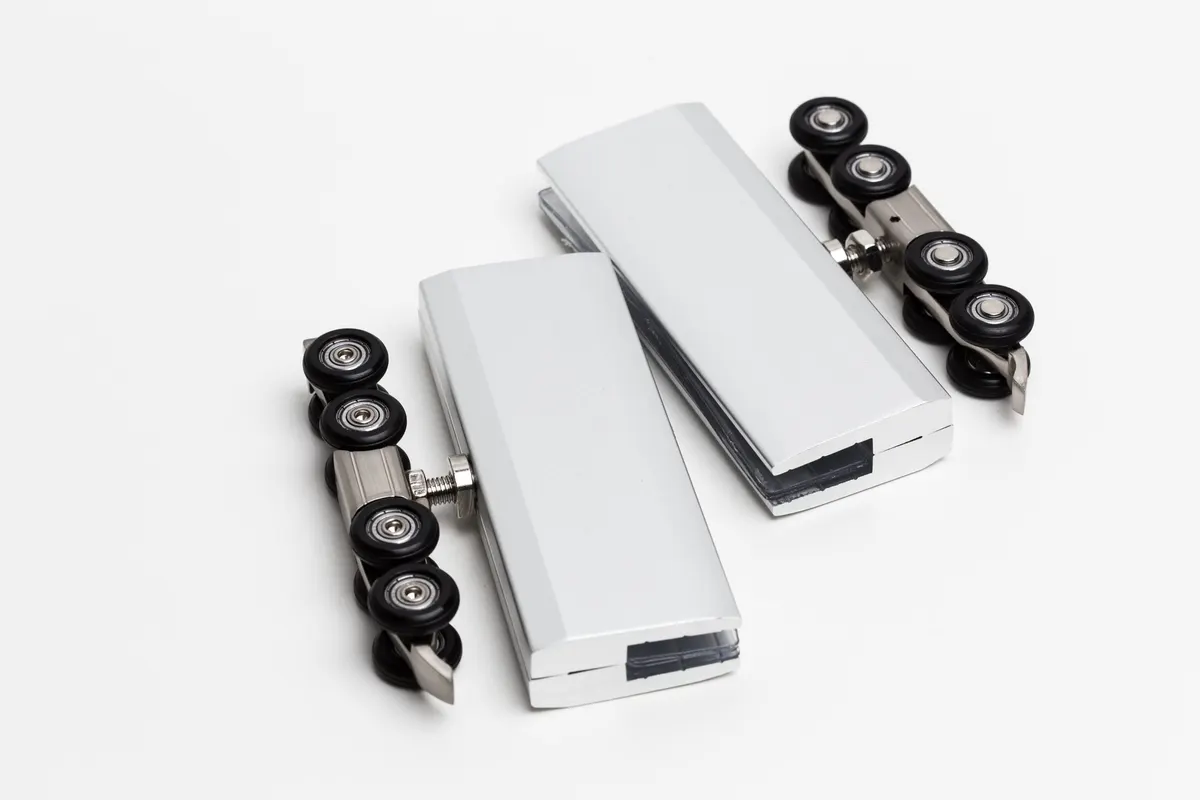
Rollers come in a few common types:
Unsealed steel rollers
Common on builder-grade doors. Durable but noisy, and their exposed bearings collect dirt and wear out.
Nylon rollers with sealed bearings
Quieter and smoother. A popular upgrade because they reduce noise and usually need less frequent lubrication.
Plastic rollers without bearings
Inexpensive and quiet at first, but tend to wear and crack sooner. Not a great long-term choice for a busy door.
Heavy-duty rollers
Longer stems and more bearings for heavier doors. Useful on large or heavily insulated doors.
Symptoms of track and roller problems
- Rumbling or grinding during travelWorn roller bearings or dry, damaged rollers.
- Scraping soundsA roller rubbing the track lip, or a section rubbing the jamb.
- Door shakes or vibratesLoose track brackets or wobbling rollers.
- Visible gaps between roller and trackTrack that has spread or pulled away from the door.
- Door hesitates at the curveMisaligned horizontal track or a worn roller catching.
- Rollers popping out of the trackA serious sign of track damage or misalignment.
- Dents, kinks or bendsOften from a vehicle or something leaned against the track.
- Wobbly or cracked rollersRollers that tilt in the hinge or have chunks missing.
What causes the damage
Track damage is usually physical: a car backing a little too close to the side, a snow blower or lawn mower nudged into the vertical track, a ladder leaned in the wrong place. Track can also shift if its brackets were fastened into drywall rather than framing, or if lag screws loosen after years of vibration.
Roller wear is mostly about time and use. Unsealed bearings collect dust and grit, lose lubrication, and eventually seize or wobble. A seized roller doesn’t roll; it slides, which wears the track and makes the opener work harder.
A door that is out of balance or has a slack cable can also put uneven stress on the rollers and track, which is why we look at the whole system rather than just replacing a noisy part.
Repair options
Roller replacement and upgrades
Replacing worn rollers with quality sealed-bearing rollers is often the single most effective fix for a noisy door. Most rollers can be changed one at a time, but the bottom rollers are attached to the bottom brackets, which hold the lift cables and are under spring tension. Those must be handled by a technician with the spring tension safely released.
Track realignment
Vertical track should be plumb and set a consistent distance from the door; horizontal track should be level side to side with a slight rise toward the back. We loosen, reposition and re-secure brackets into solid framing so the rollers run without binding.
Straightening or replacing track
Minor dents can sometimes be carefully straightened. A track that’s kinked, twisted or creased is replaced, since a weakened track can let rollers escape under load.
Re-hanging a door that’s off track
When rollers leave the track, the door can twist and bind with a lot of stored force behind it. Getting it back on means stabilizing the door, managing spring tension and cable position, and repairing whatever let it come off in the first place.
Hinge and bracket replacement
Cracked hinges and worn roller stems let the door sag away from the track. We replace damaged hinges and bracket hardware and make sure everything is fastened into solid material.
Our repair process
- Inspect the full travel pathWe watch the door through a cycle and check each roller, hinge, bracket and section of track.
- Check balance and cablesUneven lift or a weak spring can be the real cause behind track and roller damage.
- Explain the optionsRoller upgrade, realignment, track replacement—whatever fits the situation, with clear pricing.
- Make the repairsSpring tension is released whenever bottom brackets or cables are involved.
- Lubricate and testHinges and roller bearings are lubricated (not the inside of the track), and the door is run until it moves quietly and evenly.
Why this is a professional job
Swapping a squeaky upper roller might look simple, but many track and roller repairs connect to the parts of the door that are under tension: the bottom brackets, the cables and the springs. A door that’s partly off its track can also shift without warning. Professional repair keeps those risks controlled and fixes the underlying cause, so the door doesn’t end up back off the track.
Stop using the opener, unplug it if you can do so safely, and keep everyone away from the door. Don’t try to force rollers back in or pull the emergency release while the door is partly open.
Standard, low-headroom and high-lift track
Not every garage uses the same track layout. Standard-lift track brings the door up and curves it back along the ceiling just above the opening, which suits most attached garages. Low-headroom track uses a tighter arrangement for garages with little space above the door, sometimes with a second track for the top section. High-lift track sends the door further up the wall before it turns, which is useful in garages with tall ceilings, storage lifts or a desire to keep the ceiling clear.
When we repair or replace track, we match the existing layout unless there’s a good reason to change it. Changing track type also affects springs, cable drums and opener placement, so it’s a bigger project than it might seem. If you’re considering high-lift for a car lift or overhead storage, it’s best planned along with any spring and opener updates.
Other ways to quiet a door
Rollers get most of the attention when it comes to noise, but they’re not the only factor. Loose hinges rattle; a dry torsion spring creaks as it winds; an opener mounted directly to a joist can transmit vibration into the rooms above; and a chain drive slapping a loose rail adds its own racket. A quieter door is usually the result of a few small fixes together: good rollers, tight and lubricated hinges, a balanced door, and an opener mounted securely—sometimes with vibration-reducing hangers.

Tracks and rollers through a Merton year
Seasonal changes in Wisconsin affect how a door rides. Cold weather thickens old grease in roller bearings, so a door that was a little noisy in fall can be loud and sluggish by January. Rollers that are already worn tend to get worse quickly in the cold.
Moisture is the other factor. Salt and water at the bottom of the door attack the lower track and bottom rollers first. And garages that aren’t heated can see condensation form on metal parts during spring and fall temperature swings. A fall inspection and fresh lubrication on hinges and roller bearings, plus rinsing the lower track after the salt season, help keep things moving.
Track and roller FAQs
Should I grease the inside of my garage door track?
No. Rollers are meant to roll inside the track, and grease in the track collects dirt that makes things worse. Lubricate the roller bearings and hinges instead, and wipe the inside of the track clean.
Will new rollers really make my door quieter?
In many cases, yes. Replacing worn steel rollers with sealed-bearing nylon rollers is one of the most noticeable noise improvements you can make, especially combined with lubricated hinges and a balanced door.
Can a bent track be fixed or does it need to be replaced?
Small dents can sometimes be straightened. Kinked, creased or twisted track should be replaced, since it can let rollers escape under load.
Why did my door come off the track?
Common causes include a vehicle or object hitting the track, a broken cable or spring causing uneven lift, loose track brackets, or worn rollers that slipped past the track lip. We fix the cause along with the symptom.
Can I replace the rollers myself?
Upper rollers on some doors can be replaced by a careful homeowner, but the bottom rollers are attached to brackets under spring tension. For safety, we recommend professional replacement, especially for the bottom brackets.