Openers have come a long way. Many older units were loud, slow and limited to a single remote. Today you can choose ultra-quiet belt drives, wall-mount units that free up the ceiling, battery backup for power outages, and phone apps that tell you whether you left the door open. What hasn’t changed is that an opener is only as good as its installation.
This page covers new opener installations—either replacing an old unit or adding an opener to a door that’s been operated by hand. If your current opener is acting up and you’re not sure it needs replacing, see opener repair first.
Check the door before the opener
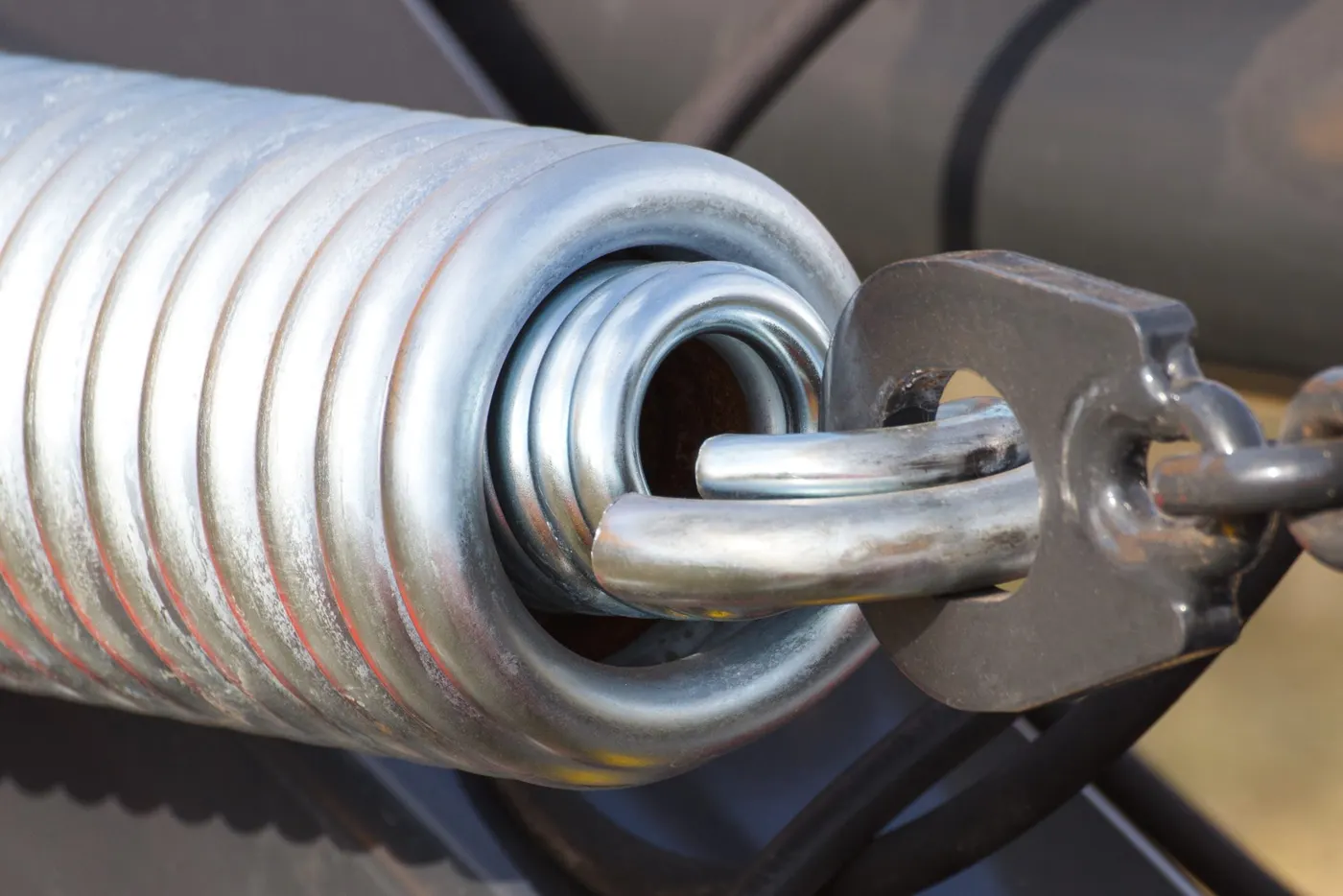
Here’s something many people don’t realize: the opener isn’t supposed to lift the door’s weight. The springs do that. A properly balanced door should feel fairly light when you lift it by hand with the opener disconnected, and it should stay roughly in place if you let go halfway.
If the door is heavy or drops, putting a new opener on it will shorten the opener’s life and can make the safety reversal less reliable. So before any opener installation, we check the door’s balance, springs, cables, rollers and track. If something needs attention, we’ll tell you first. Sometimes the “bad opener” turns out to be a worn spring.
Choosing a drive type
Belt drive
A reinforced belt moves the trolley along the rail. Smooth and quiet, which makes it a favorite when there’s a bedroom or living space above or next to the garage.
Chain drive
A metal chain does the pulling. Durable and typically budget-friendly, but noisier. A good fit for detached garages where sound doesn’t carry into the house.
Wall-mount (jackshaft)
Mounts beside the door and turns the torsion shaft directly. Frees the ceiling for storage or a car lift and is very quiet. Requires a compatible torsion spring setup.
Screw drive
A threaded rod moves the trolley. Fewer moving parts, though it can be louder than belt drives. Less common in new installations today.
Horsepower ratings (or the equivalent ratings some manufacturers use for DC motors) should be appropriate for the door’s size and construction. A heavier insulated double door or a tall door on a detached garage may call for more capacity than a lightweight single door.
Features worth considering
- Battery backup — lets the door operate for a limited number of cycles during a power outage, which is handy during winter storms.
- Smartphone control and alerts — check whether the door is open, close it from away, and get notifications when it moves.
- Exterior keypad — entry without a remote for kids, dog walkers or anyone else you trust.
- Integrated lighting — brighter, longer-lasting LED lighting in the opener head.
- Rolling-code security — remotes that change their code each use, making them harder to copy.
- Soft start and stop — gentler on the door and hardware, and quieter at each end of travel.
- Automatic door locks — available on some wall-mount models.
We’re not tied to selling every feature. If you just want a reliable opener and two remotes, that’s a perfectly good choice.
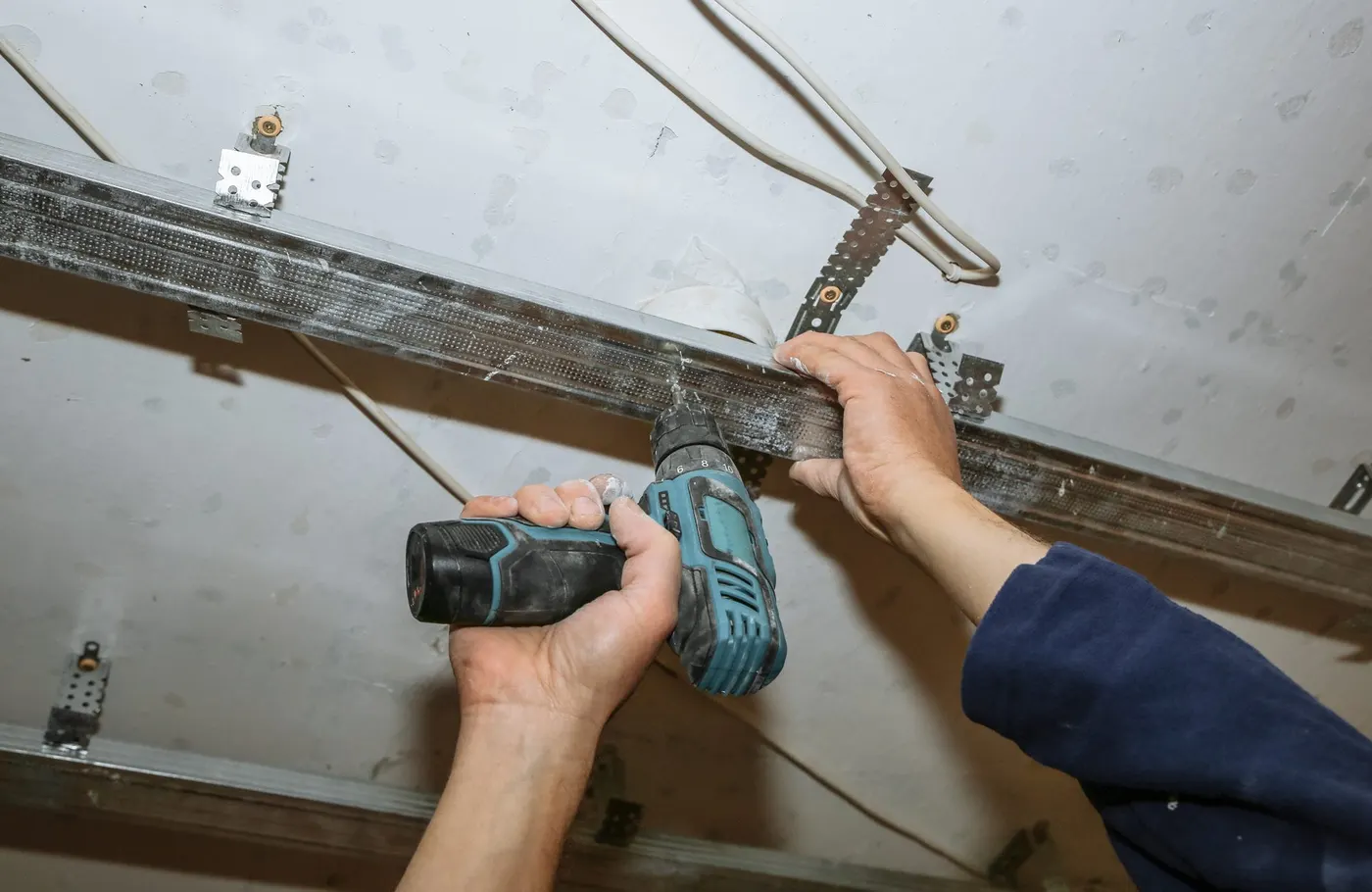
How we install an opener
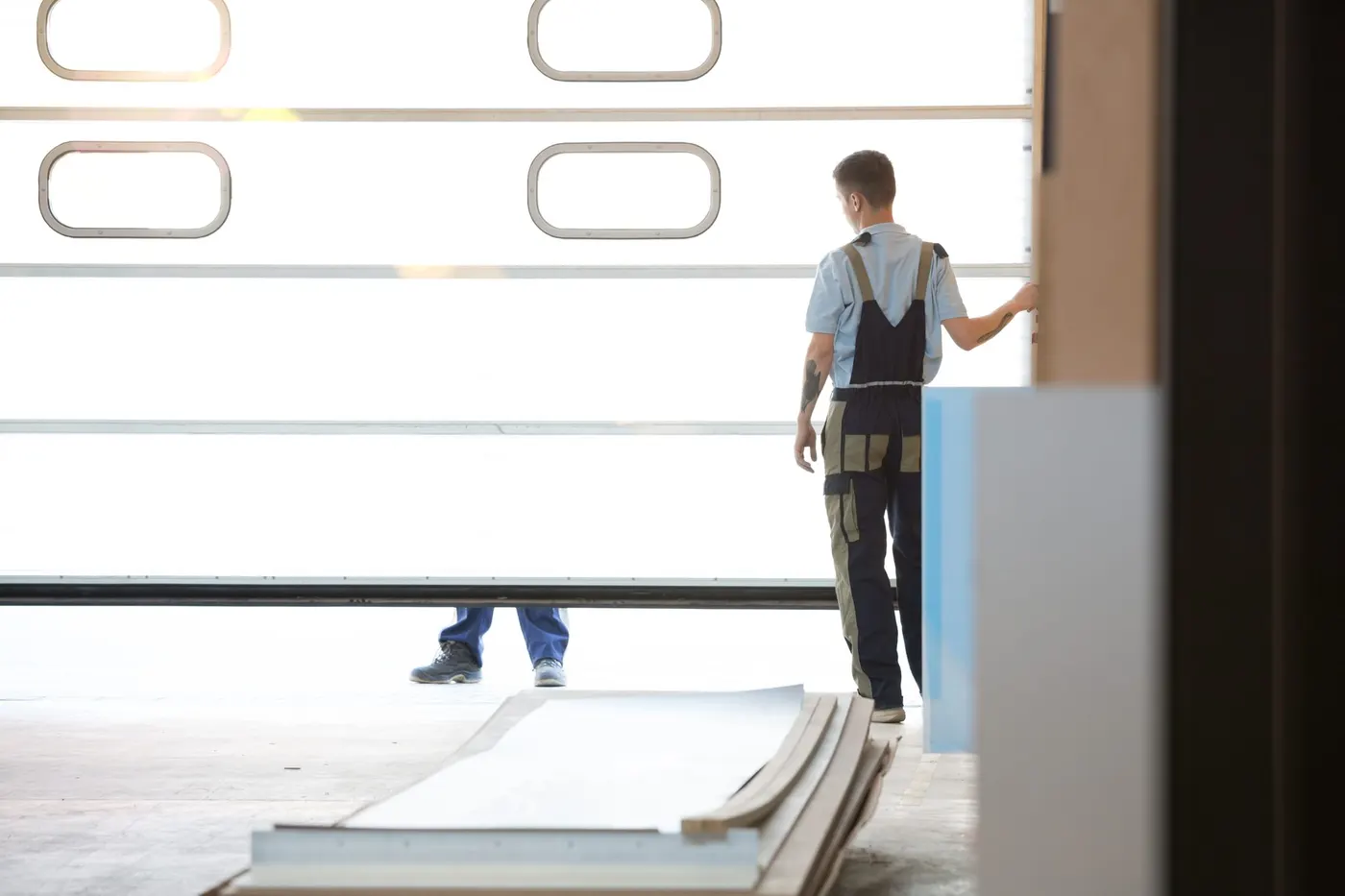
- Inspect and balance the doorWe confirm the door moves freely and is properly balanced before connecting anything.
- Remove the old unitOld openers, rails, brackets and wiring are taken down. We dispose of the old unit for you.
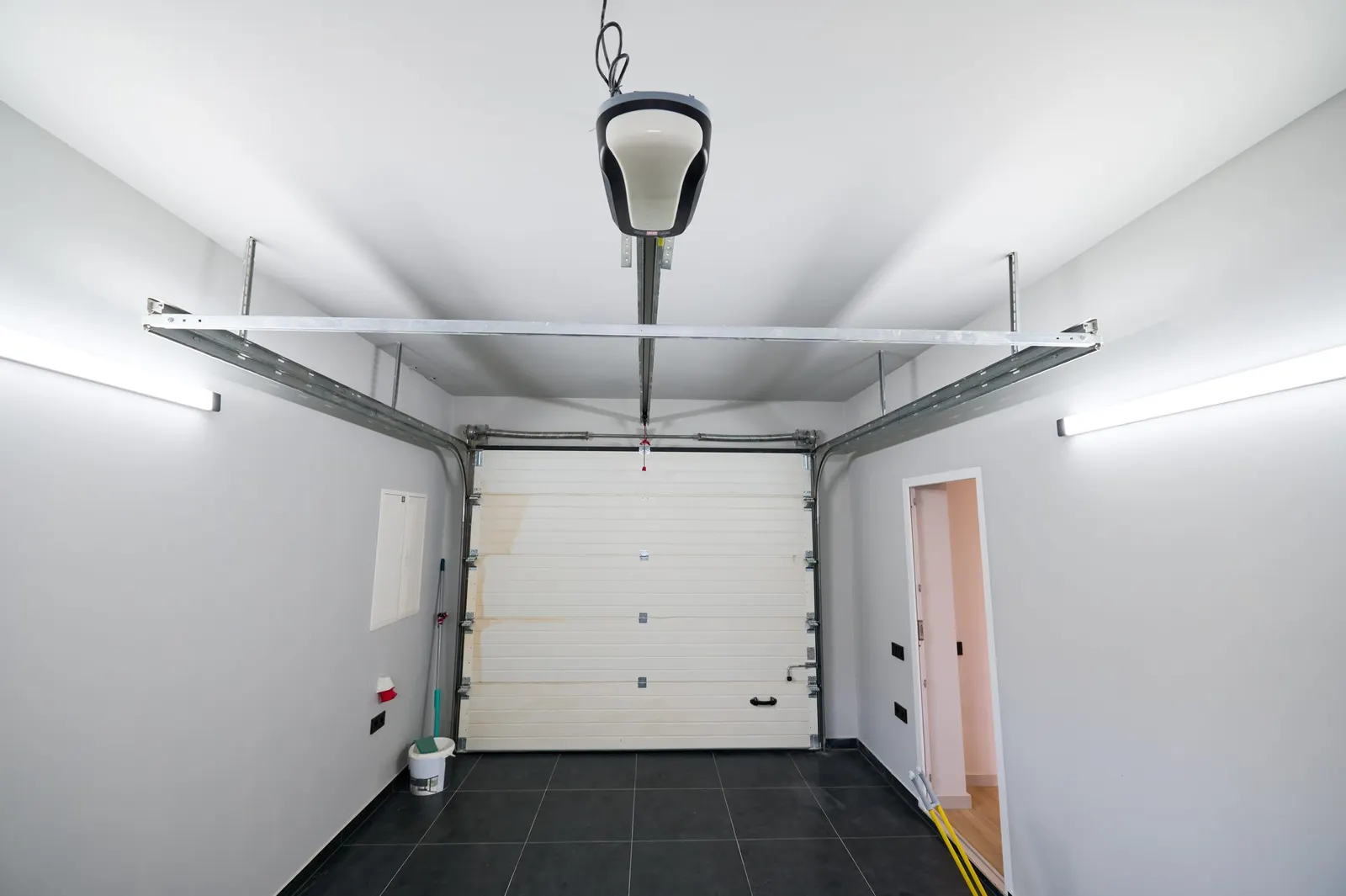
- Mount the header bracket and railFastened into solid framing at the correct height so the door arm pulls at the right angle.
- Hang the motor unitSecured to ceiling joists with sturdy hangers so it doesn’t sway or vibrate.
- Install safety sensors and wall controlPhoto-eyes go on both sides of the door, typically no more than six inches off the floor. The wall control is mounted out of children’s reach and within sight of the door.
- Set travel and forceWe program open and close limits, then adjust force so the opener does its job without overpowering obstructions.
- Test the safety systemsWe test reversal against an obstruction on the floor and by interrupting the photo-eye beam. Then we program your remotes, keypad and app.
Why professional installation matters
An opener installation involves electrical connections, ceiling mounting, and safety adjustments that directly affect whether the door will stop and reverse if something is in the way. Getting those right is the whole point. Professional installation also means the opener is checked against the door’s actual condition, the rail is aligned so the trolley doesn’t bind, and the wiring for sensors and controls is neat and protected from damage.
Older openers that were installed before photo-eye sensors were standard may lack modern safety protections entirely. If yours doesn’t have sensors near the floor, it’s worth replacing for that reason alone.
Opener safety at home
Lay a 2×4 flat on the floor where the door closes and run the door down. It should reverse when it touches the board. Then, while the door is closing, pass something through the photo-eye beam; the door should stop and reverse. If either test fails, stop using the opener until it’s adjusted.
A few other habits help: keep remotes away from young children, don’t walk or run under a moving door, and know where the manual release is. Use the release only with the door closed when possible—if a spring is broken, a door released in the open position can drop.
Placement, headroom and the details that matter
Where the opener goes affects how well it works and how the garage functions afterward. A ceiling-mounted opener needs a rail that runs from the header above the door back toward the center of the garage. The length of that rail depends on the door height: a taller door needs a longer rail. On a garage with a shallow ceiling, a storage platform or a bonus-room overhang, we look carefully at whether a standard rail fits or whether a wall-mount unit is the cleaner solution.
The angle of the door arm matters too. If the header bracket is mounted too low or too far from the door, the opener pulls the top section at an awkward angle, which strains the top section and can cause it to buckle on a wide door. Proper bracket placement, and a reinforcing strut on the top section when the door calls for it, keeps the pull straight.
Inside the house, think about where you’ll use the wall control most. It should be visible from the door, out of reach of small children, and convenient when you’re carrying groceries. Some homeowners add a second wall control near a side door. And if you’re adding a keypad outside, a spot near the door but protected from direct snow and spray helps it last.
Smart features and privacy
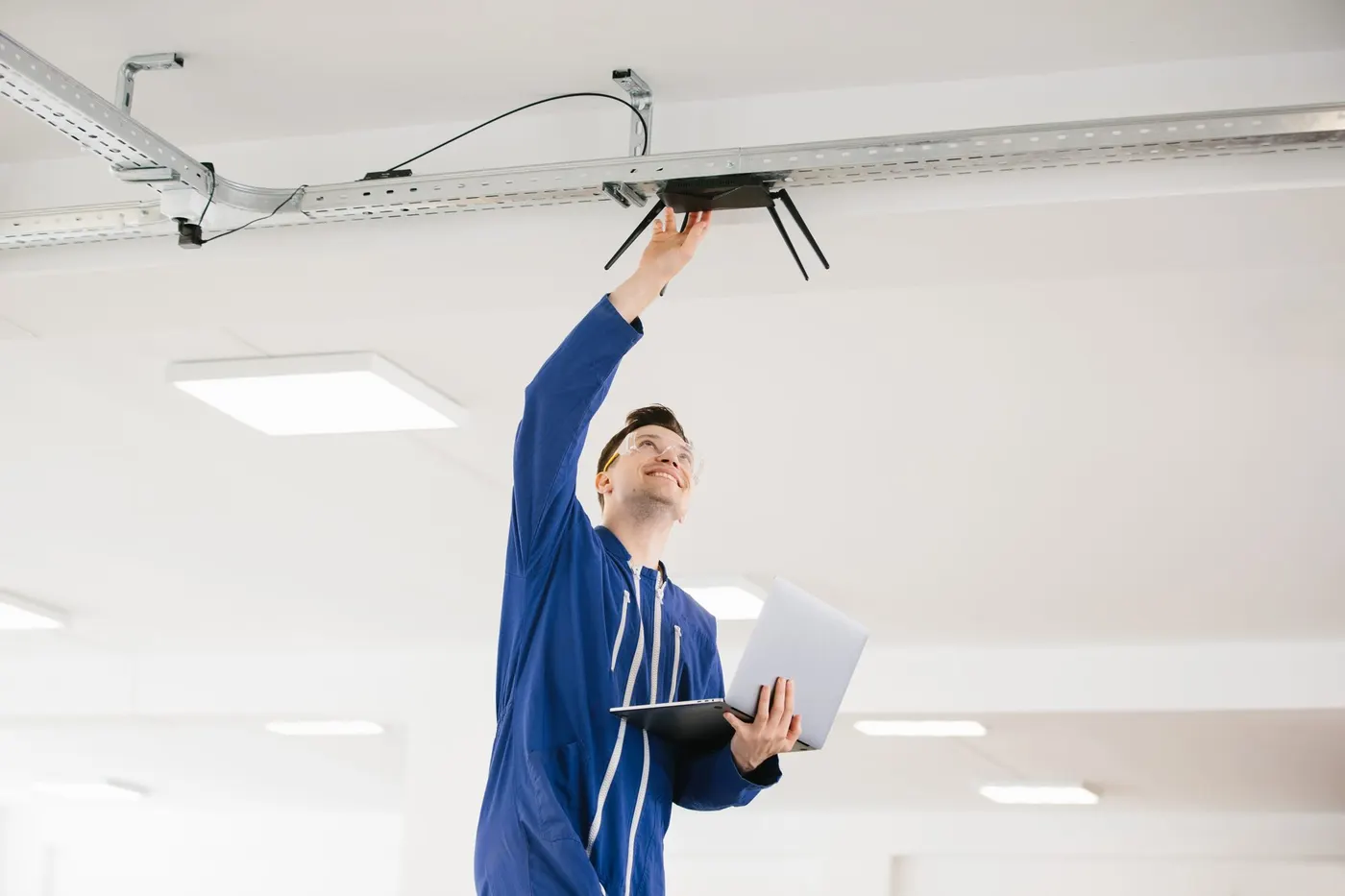
App-connected openers are genuinely useful: you can check the door from work, let in a family member, or close a door you forgot about. They do require a reliable Wi-Fi signal in the garage, which is something to check before you buy. If your router is on the far side of the house, an extender may be needed. As with any connected device, use a strong password on the associated account and keep the opener’s firmware updated through the app.
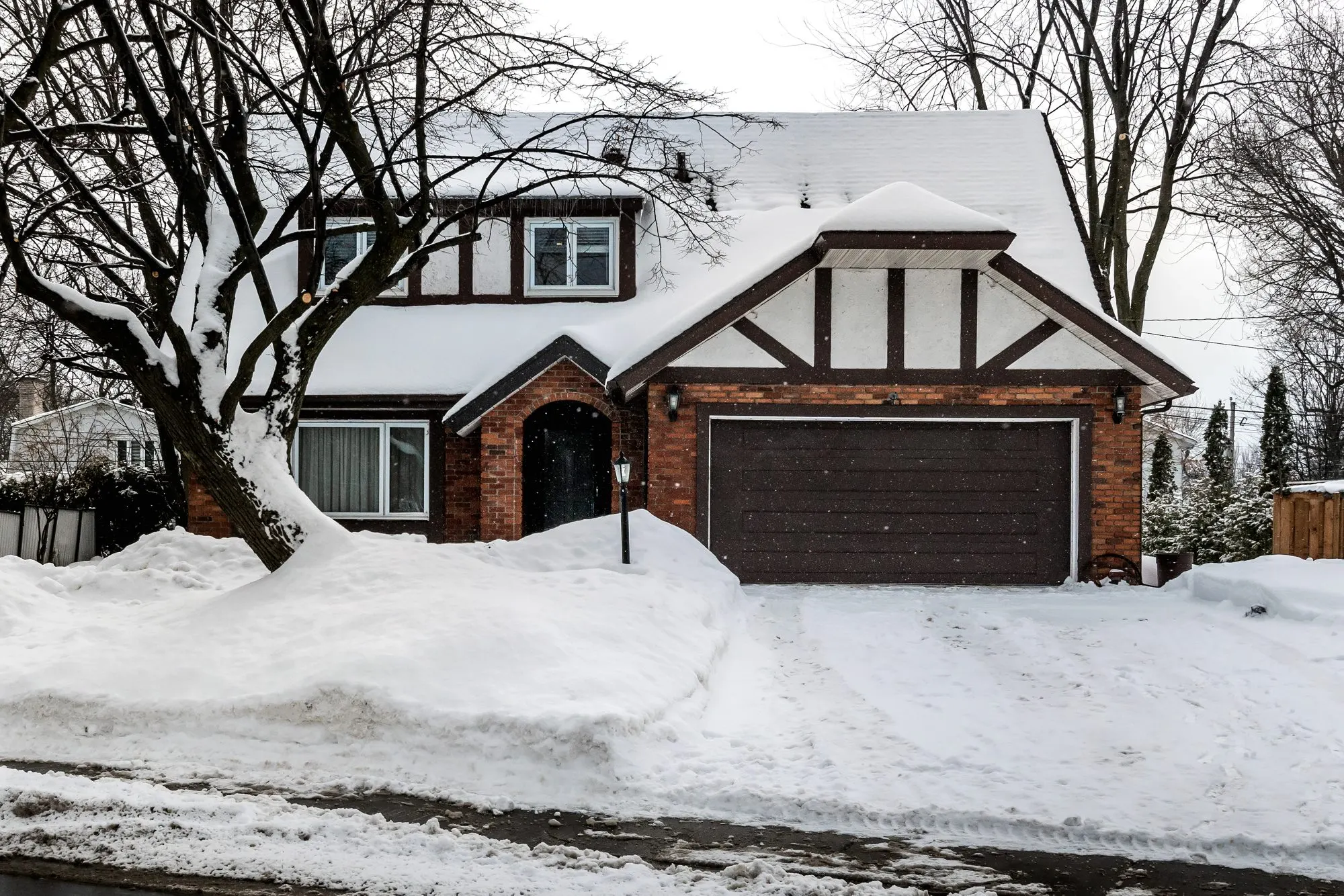
Openers in a Wisconsin winter
Cold weather is a real test for openers. Lubricants thicken, seals can freeze to the floor, and an opener has to start a heavier, stiffer door. That’s why balance and correct force settings matter so much here. Turning force up to get through a cold snap is a common mistake that weakens the safety reversal.
In Merton, where winter storms occasionally knock out power, battery backup is a feature many homeowners appreciate. Photo-eye sensors also need a little winter attention: snow, ice and road spray can block the lenses or knock a sensor out of alignment, causing the door to refuse to close. Mounting them securely and keeping the area clear goes a long way.
Opener installation FAQs
Which type of opener is the quietest?
Wall-mount and belt-drive openers are generally the quietest options. Chain drives are usually louder. Door condition matters too: worn rollers and dry hinges add noise no matter which opener you choose.
Can I keep my old remotes with a new opener?
Usually not. Remotes are typically specific to the opener brand and its radio technology. Your new opener will come with compatible remotes, and additional remotes or a keypad can be added.
Will a wall-mount opener work on my door?
Wall-mount openers generally need a torsion spring system and enough side room next to the door. Doors with extension springs or limited side room may not be compatible. We’ll check during the estimate.
Do I need an outlet on the ceiling?
Most ceiling-mounted openers plug into a receptacle near the motor unit. If there isn’t one in a suitable spot, you’ll need an electrician to add one before installation.
How long do garage door openers typically last?
Lifespan depends on usage, the door’s balance and the quality of the unit. Openers on well-balanced doors that aren’t forced to lift excess weight generally last longest.