Garage doors rarely fail all at once. Usually there’s a warning: a new noise, a hesitation halfway up, a door that closes and then pops back open. Those early signs are worth paying attention to, because a small adjustment now can prevent a bent track or a burned-out opener later.
This page covers general garage door repair—the broad category of problems with the door itself and its hardware. Some components have their own dedicated pages because they come up so often: springs, cables, tracks and rollers, and openers. If you’re not sure which part is to blame, start here.
How the system fits together
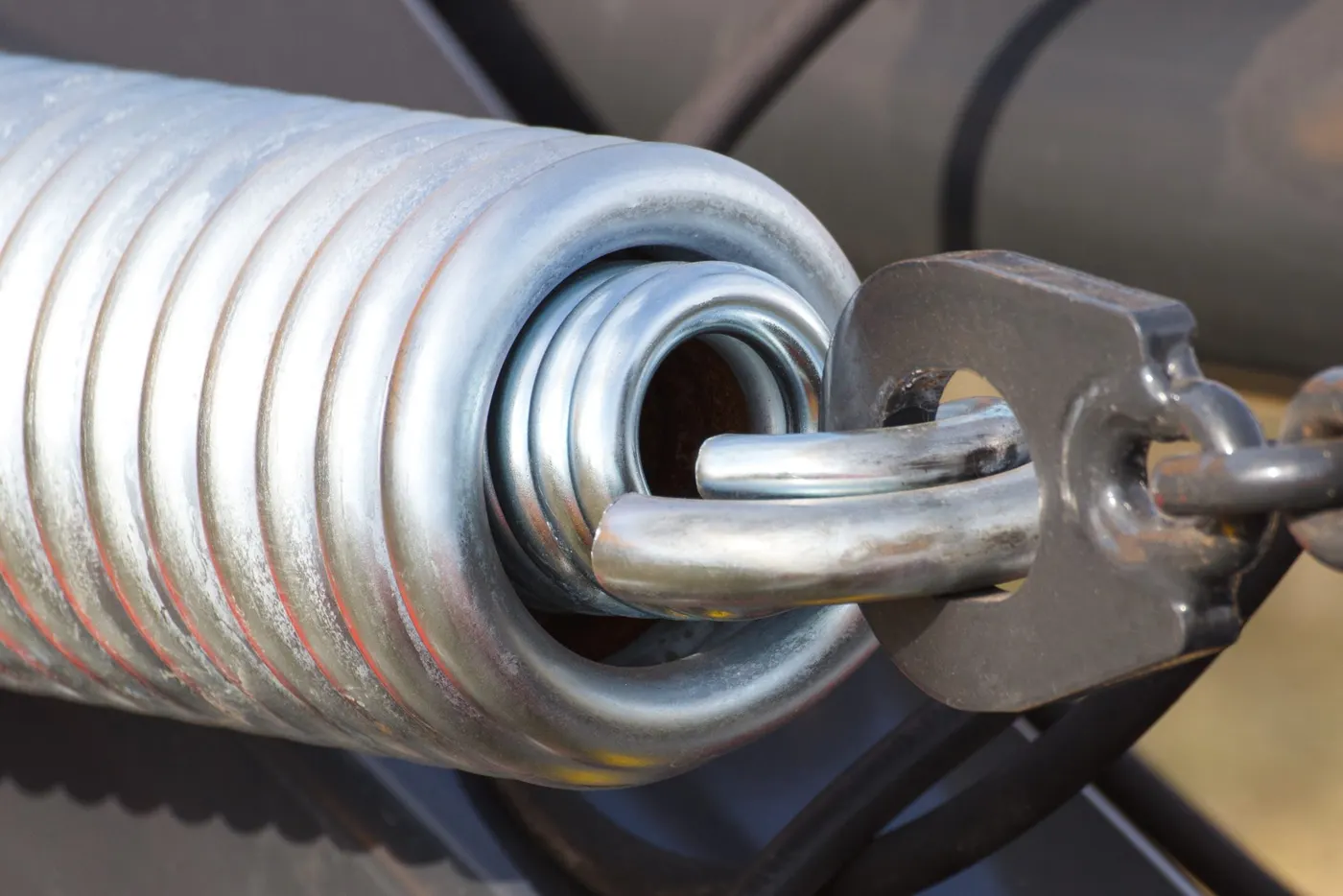
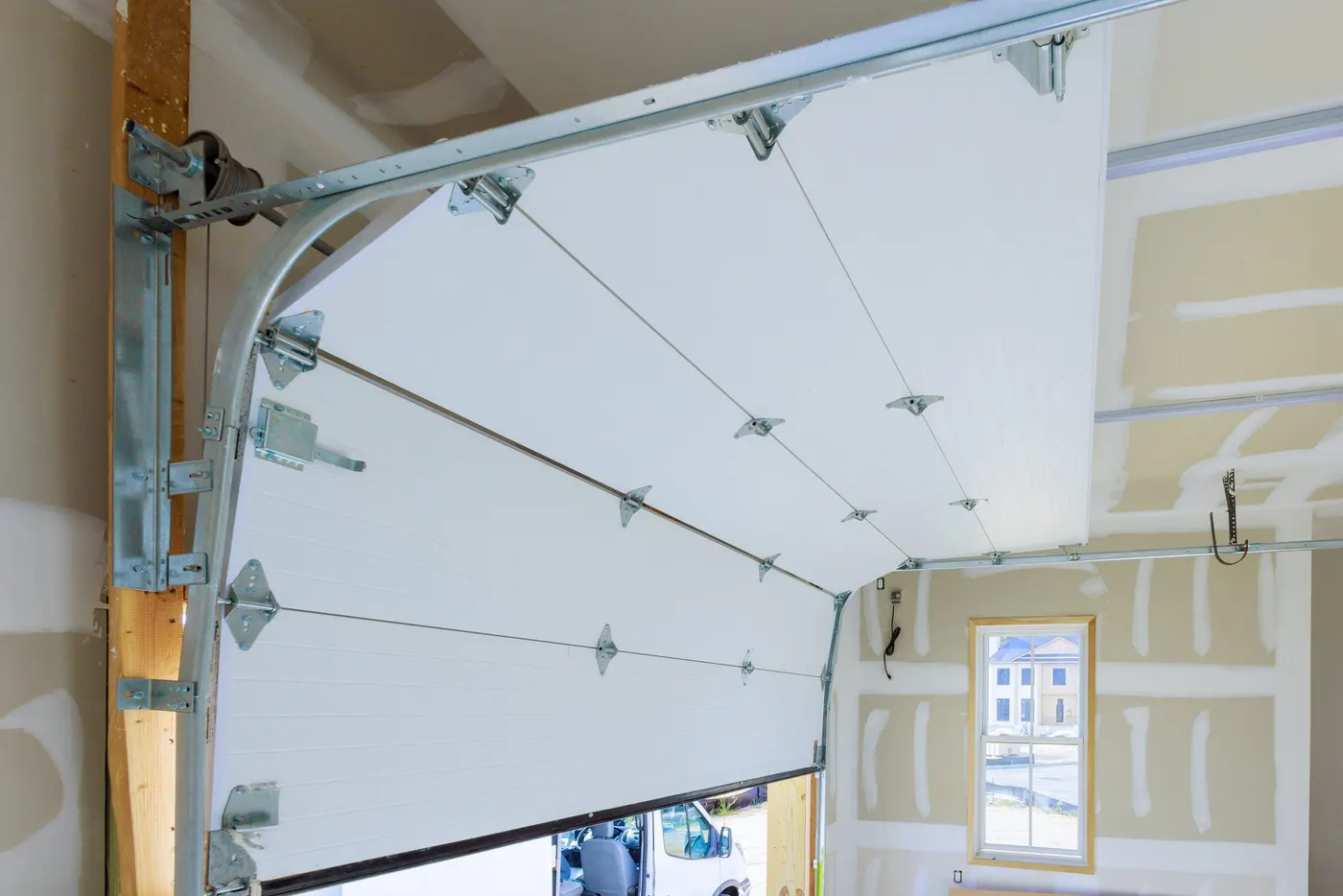
A residential sectional door is several horizontal panels hinged together. Rollers on each section ride in vertical and horizontal tracks. Springs—either torsion springs on a shaft above the door or extension springs alongside the horizontal tracks—counterbalance the door’s weight through steel lift cables. The opener moves the door, but it’s designed to guide a balanced door, not to hoist a heavy one.
That’s why one worn part can cause symptoms somewhere else. A weak spring makes the opener strain. A dry roller makes the door shudder. A loose hinge lets a section flex and bind. Good repair work means looking at the whole system rather than just replacing whatever made the noise.
Warning signs worth a call
- New grinding, squealing or poppingOften dry or worn rollers and hinges, but can signal a spring nearing failure.
- Slow or jerky travelBinding in the track, a balance problem, or an opener under strain.
- Door closes, then reversesPhoto-eyes, an obstruction, travel limits, or something dragging.
- Gap on one side at the floorUneven cable tension, a loose cable, or a settling slab.
- Door feels heavy by handThe springs aren’t carrying their share of the weight.
- Visible sag or bow in a sectionWeakened panel, missing strut on a wide door, or hinge damage.
- Daylight around the edgesWorn weatherstripping or a door that’s shifted out of position.
- Opener runs but nothing movesDisengaged trolley, stripped gear, or a broken spring.
If the door has come partly out of its track, is hanging crooked, or a cable is visibly loose, stop using it. Running the opener on a door in that condition can turn a manageable repair into a much bigger one.
The repairs we make most often
Hinges and fasteners
Every time the door cycles, it flexes slightly at each hinge. Over years, screw holes in the end stiles can loosen or strip, and hinges crack. We replace damaged hinges, re-fasten them into solid material, and check the end stiles for deterioration that would cause the problem to come back.
Damaged or dented sections
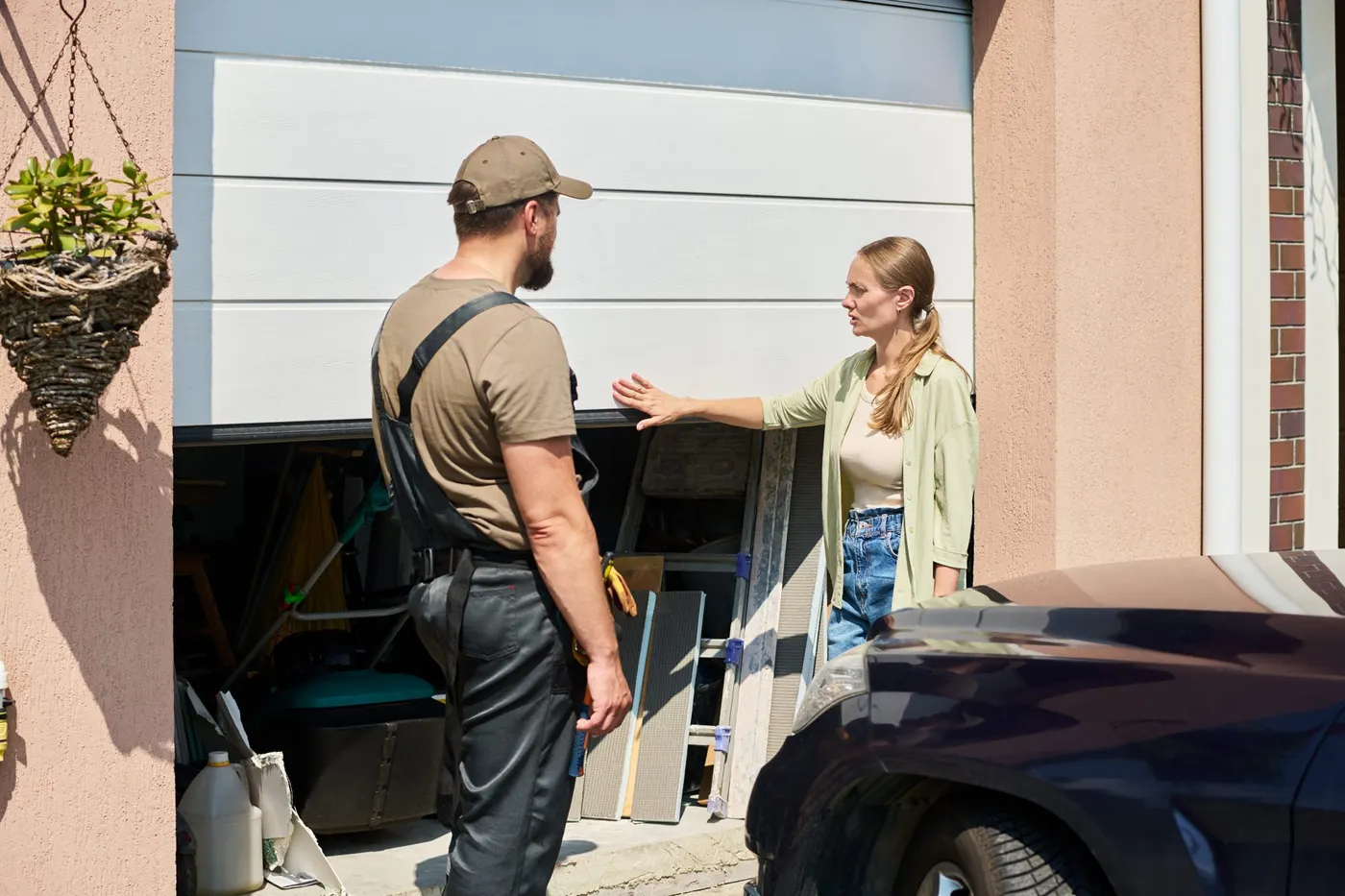
A bumped bottom panel or a section creased by a car is common. If the rest of the door is in good shape and the matching section is still available from the manufacturer, replacing just the damaged section can be a sensible repair. If the model is discontinued or several sections are affected, we’ll compare that cost against a full replacement so you can decide.
Reinforcement struts
Wide double doors, especially lighter non-insulated ones, often use horizontal struts to keep the sections from bowing. A missing, bent or loose strut can let the top section flex when the opener pulls it, which shows up as a door that buckles at the top or jumps at the start of travel.
Weatherstripping and bottom seals
Cracked or flattened seals let in cold air, water, leaves and the occasional mouse. Replacing the bottom gasket and perimeter stops is straightforward and makes a noticeable difference in a heated or attached garage.
Balance and adjustment
Springs lose some tension over time. A door that’s gone out of balance is hard on the opener and can drop faster than it should. Rebalancing is a spring-tension adjustment, which we handle with proper winding tools—it isn’t something to attempt with a screwdriver and a ladder.
How a repair visit works
- Listen to the symptomsWe start with what you’ve noticed: when it started, what it sounds like, whether it’s worse in the cold.
- Run and observe the doorWe watch a full cycle under the opener and, where safe, by hand with the opener disengaged.
- Inspect the systemSprings, cables, drums, bearings, rollers, hinges, track, opener and seals all get a look, even if the obvious problem is in one place.
- Explain and quoteYou’ll hear what we found, what needs fixing now, what can wait, and the cost. Nothing starts until you agree.
- Repair and testWe complete the repair, rebalance if needed, reset the opener, and verify the safety reversal before leaving.
Repair or replace? An honest way to decide
We’d rather keep a good door running than sell a new one that isn’t needed. A repair usually makes sense when the sections are structurally sound, the problem is limited to hardware, and the door suits how you use the garage. Replacement tends to make more sense when:
- Rust has eaten through the bottom of more than one section.
- Several sections are cracked, delaminated or creased.
- Replacement sections are no longer made for your door.
- The garage is attached or heated and the door has no insulation.
- Repair bills keep coming back for the same aging door.
We’ll lay out both paths with real numbers so you can make the call.
Why professional repair matters
A lot of garage door maintenance is homeowner-friendly. Repairs often aren’t, because so many of them involve parts that are under tension or holding up the door. Professional repair gets you the right replacement parts for your door’s weight and design, proper tools for any spring or cable work, and a complete check of the system so the next weak link doesn’t fail next month. It also keeps the opener’s safety features working the way they were designed to.
Stay safe until the door is fixed
If you hear a loud bang, see a loose or frayed cable, notice a gap in a spring, or the door is crooked in its track, don’t keep cycling it. Keep people and pets clear of the opening, and don’t try to release or adjust spring tension yourself.
It’s also wise to avoid pulling the emergency release while the door is open if you suspect a broken spring—without spring support, the door can drop quickly. If the car is trapped inside, call and describe the situation; we can talk you through safe options.
What to tell us when you call
A good description saves time and often means we arrive with the right part on the truck. Before you call or fill out the form, it helps to note a few things. When did the problem start, and did anything happen right before it—a bump, a power outage, a cold snap? Does the noise happen on the way up, the way down, or both? Is it worse first thing in the morning? Does the door behave differently when you use the wall button versus the remote?
Photos are useful too. A picture of the springs above the door, the bottom corners where the cables attach, and the opener’s label tells us a lot. If an indicator light on the opener is blinking, count the flashes. And if you know roughly how old the door is, or whether parts have been replaced before, mention that. None of this is required, but it helps us give you a more useful first answer.

Cold-weather repair calls in Merton
Repair calls in this area spike when the temperature drops. Cold thickens old grease on rollers and hinges, so a door that was merely noisy in October becomes sluggish in January. Bottom seals can freeze to the concrete, and an opener trying to break that bond may stall or reverse. Springs that were already near the end of their life are more likely to break on a frigid morning.
Some practical advice for Merton homeowners: if the door is frozen to the floor, free the seal gently rather than letting the opener force it. Clear packed snow and ice from the threshold so the door can seal properly. And if you’ve noticed early warning signs in the fall, get them looked at before the first hard freeze rather than after.
Garage door repair FAQs
Why is my garage door suddenly so loud?
The usual suspects are dry or worn rollers, hinges that need lubrication or replacement, loose hardware, or an opener with a worn drive. A sudden change in noise can also point to a spring under strain. If lubrication doesn’t quiet it down, have it inspected.
Can a single dented panel be replaced?
Often, if the manufacturer still makes that section in the same style and color. We’ll check availability and compare the cost to a full replacement, since a new section on an older door can sometimes look noticeably different.
My door is crooked. Is that dangerous?
It can be. A crooked door usually means a cable has slipped or broken, or the door has come out of the track on one side. Stop using it, keep people away, and call for a repair rather than trying to force it level.
Is it okay to use WD-40 on my garage door?
A penetrating spray isn’t a long-term lubricant. For hinges, roller bearings and springs, use a lubricant made for garage doors, typically a silicone or lithium-based spray. Don’t grease the inside of the tracks; rollers should roll, not slide.
Do you repair doors you didn't install?
Yes. We work on residential doors and openers from a wide range of manufacturers, whoever installed them originally.