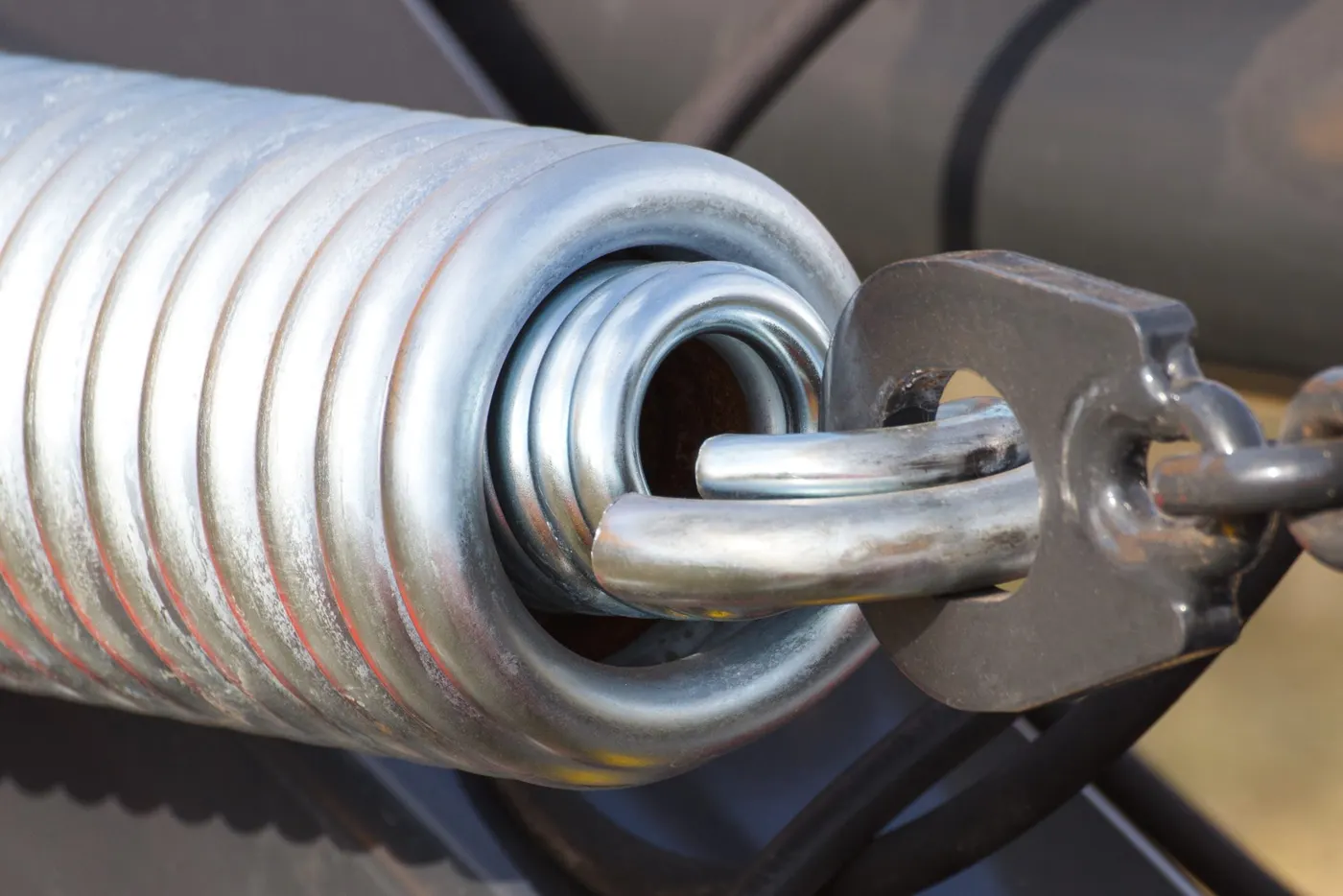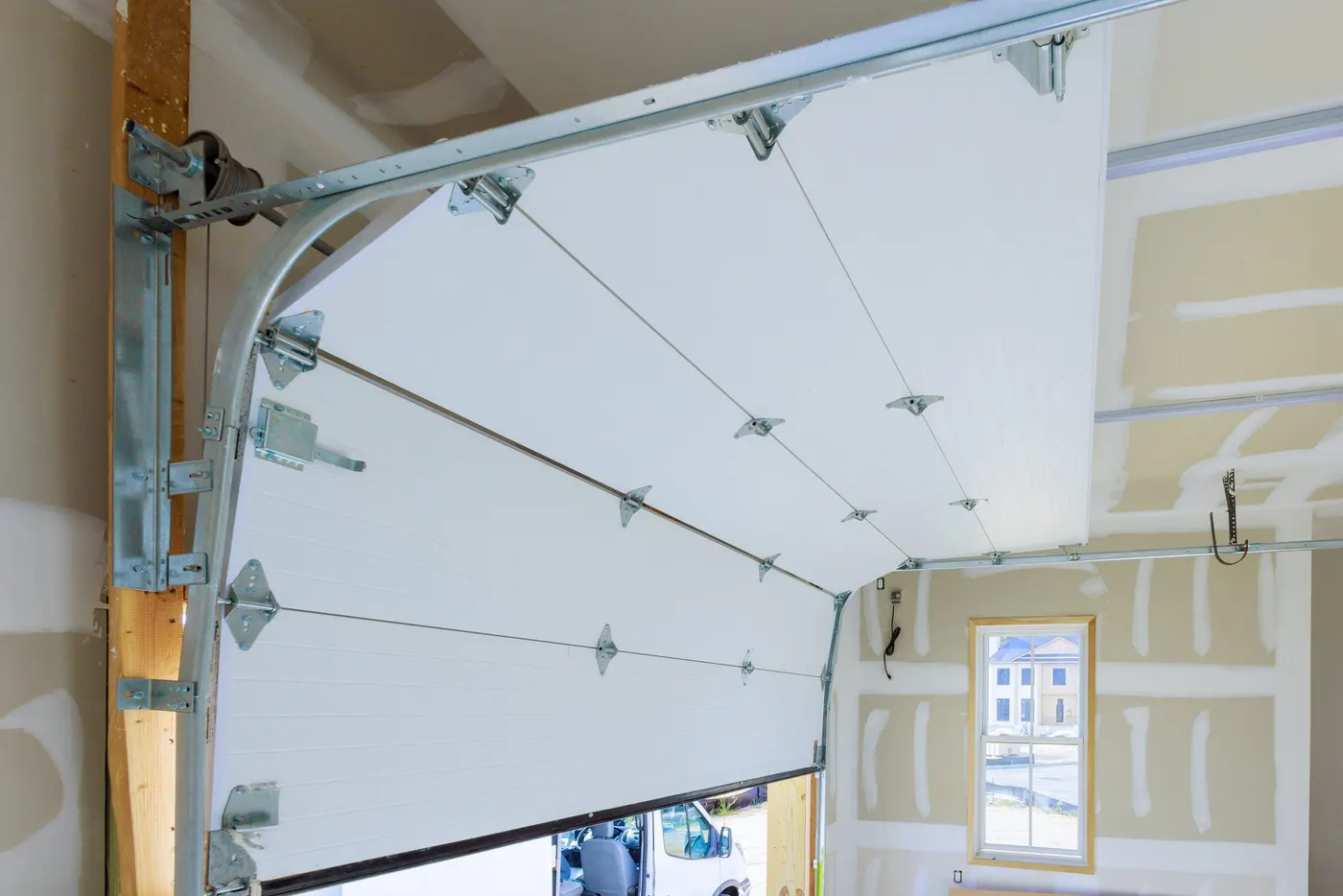
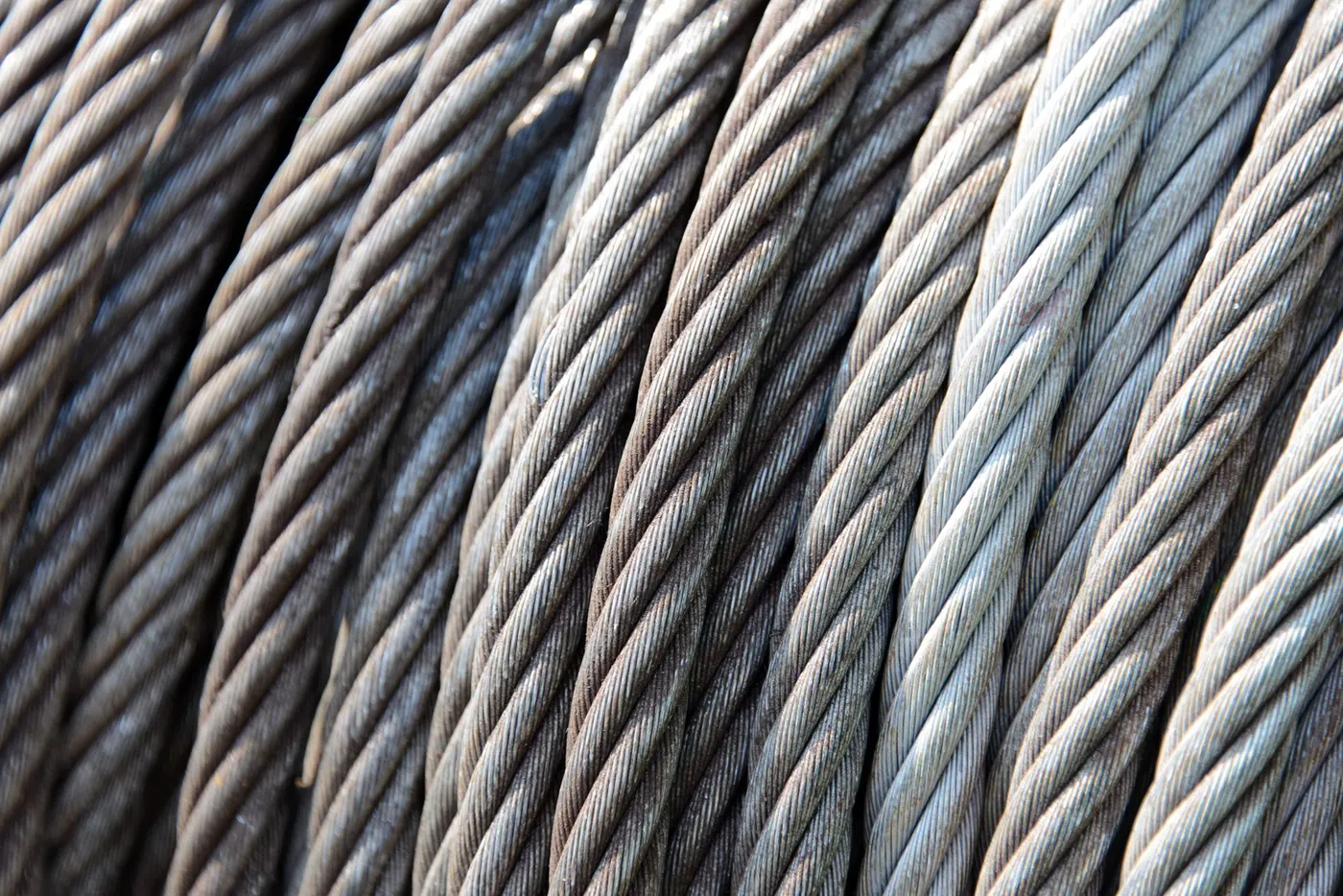
On most residential doors, a steel lift cable runs from a bracket at each bottom corner of the door up to the spring system. On torsion setups, the cables wind onto drums at the ends of the spring shaft. On extension setups, they run through pulleys attached to the springs. Either way, the cables are what actually transfer the spring’s lifting force to the door.
Because they carry so much load, cables are under tension whenever the door is closed. That makes cable work closely related to spring work in terms of risk, and it’s why we treat cable repair as a job for trained technicians. This page explains how cables fail, what you might notice, and how we repair them.
How lift cables fail
Fraying and broken strands
Garage door cables are made of many small wire strands twisted together. Over time, strands break—often near the bottom bracket where moisture collects, or where the cable rubs against something it shouldn’t. A frayed cable looks fuzzy or has visible broken wires sticking out. It may hold for a while, but it’s weaker than it should be.
Rust and corrosion
The bottom brackets and the lowest part of each cable sit right where snowmelt and road salt end up. Corrosion weakens the cable and the bracket it attaches to. In older garages, it’s common to find the cable fine near the top and badly rusted at the bottom.
Cable coming off the drum
If one side of the door meets resistance while closing—ice on the floor, an object, a bent track—the cable on that side can go slack and unwind off the drum. When the door then opens, the cable doesn’t wind back properly, and the door rises unevenly or jams.
Snapped cable
A cable that finally breaks drops that side of the door’s support. The door tilts, and depending on its position, can bind hard in the track or fall on one side.
Signs of cable trouble
- Door hangs lower on one sideThe most common sign of a slipped or broken cable.
- Visible slack or a dangling cableThe cable has come off the drum or pulley, or broken.
- Fuzzy or frayed strandsEspecially near the bottom brackets.
- Door jerks or tilts while movingUneven lift from mismatched tension.
- Rust on cables or bottom bracketsCorrosion that signals weakening.
- Door stuck partway openOne side bound in the track after uneven lift.
The bottom bracket is where the cable attaches, and on many doors it’s under full spring tension. Loosening its fasteners can release the cable and spring force suddenly. If a cable has come loose or the door is tilted, stop using it and call a professional.
What usually causes cable problems
Cables rarely fail entirely on their own. When we replace one, we look for the reason so it doesn’t happen again. The usual root causes are:
- A broken or weak spring — when a spring breaks, the sudden change in load can make a cable jump off its drum.
- Obstruction on closing — the door lands on something on one side, the cable slackens, and it unwinds.
- Track issues — a bent or misaligned track that binds one side of the door.
- Worn drums or pulleys — grooves that no longer guide the cable cleanly, or pulleys with failing bearings.
- Corrosion — especially on garages that see a lot of salt and water.
- Age — cables simply wear out after many years of cycles.
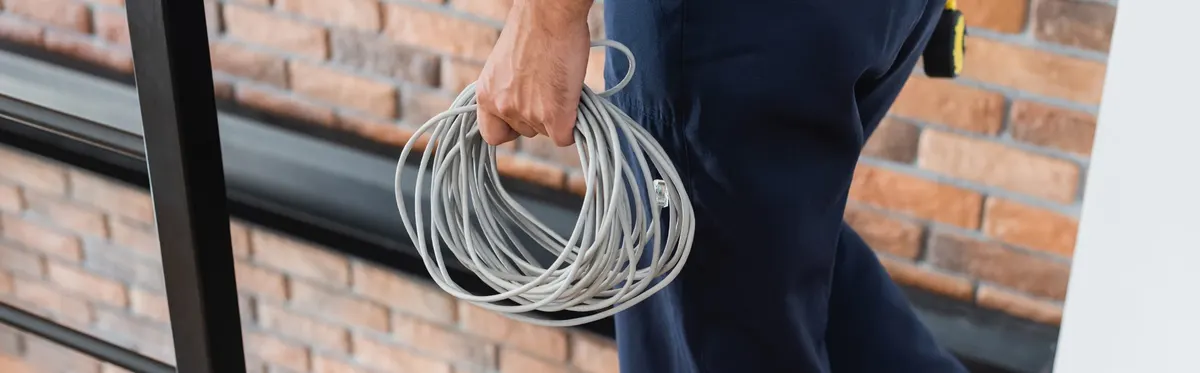
How we repair garage door cables
- Stabilize the doorWe secure the door so it can’t move or drop while we work, which may mean clamping it in the track or supporting it in position.
- Release spring tensionTension is removed safely using proper tools before cables are disconnected.
- Inspect the related partsDrums, pulleys, bottom brackets, track and springs all get checked for wear or damage that caused or contributed to the failure.
- Install new cables in pairsBoth sides are replaced together so they stretch and wear evenly. Damaged drums, pulleys or brackets are replaced as needed.
- Re-tension and levelSprings are re-tensioned and cable tension is set evenly so the door sits level on the floor and lifts straight.
- TestThe door is run through several cycles by hand and with the opener, and the safety reversal is checked.
Why we replace cables in pairs
It might seem wasteful to replace a cable that looks fine. But cables stretch slightly in service and wear at similar rates. Pairing a new cable with an old one can make it hard to keep the door level, and the older cable is likely to fail soon anyway. Replacing both gets you even tension and a longer interval before the next service.
The case for professional cable repair
Cable repair isn’t complicated in principle, but it happens on a door that’s heavy and on hardware that’s connected to loaded springs. Professionals have the tools to release and restore tension safely, the parts to match your door’s drums and height, and the experience to spot why the cable failed. That last point matters: replacing a cable without fixing a bent track or worn drum often means another call before long.
Drums, pulleys and bottom brackets
Cables don’t work alone. On a torsion system, each cable winds onto a grooved drum at the end of the spring shaft. The grooves keep the cable wrapping neatly so both sides lift at the same rate. If a drum is cracked, its set screws have loosened, or the grooves are worn, the cable can wrap unevenly and the door will tilt. On an extension system, each cable runs over pulleys—one attached to the spring and another mounted near the track. Pulleys with worn bearings or cracked sheaves can chew up a cable quickly.
At the other end, the bottom bracket anchors the cable to the door’s bottom section. It’s exposed to the wettest, saltiest part of the garage and often rusts before anything else. When a bracket corrodes or its fasteners loosen, the cable can pull free. We check brackets on every cable repair and replace any that are weakened.
Special track configurations
Garages with low headroom or high-lift track use different drum and cable arrangements than standard doors. Low-headroom systems may place the spring shaft at the back of the horizontal track instead of above the door; high-lift systems use taller drums and longer cables so the door rises higher before turning. Replacement cables have to match these setups exactly. That’s another reason a quick hardware-store cable may not be the right fit.
A safe look you can take yourself
You don’t need to touch anything to check your cables. With the door closed and the opener unplugged, stand to one side and look at each bottom corner where the cable meets the bracket. You’re looking for broken strands, rust, or a cable that looks loose compared to the other side. Then look up at the drums on each end of the spring shaft (or the pulleys on extension systems) and check that the cable is wrapped neatly in the grooves. If anything looks wrong, leave it alone and let us know what you saw. A flashlight and a phone photo are all the tools you need for this check.
Doing this once each season, especially after winter, is one of the easiest ways to catch a cable before it fails.

Cables, ice and salt in Merton
Winter in Merton is hard on cables in two ways. First, ice. When a bottom seal freezes to the slab on one side, or the door closes onto a ridge of packed snow, one cable goes slack while the other keeps winding. That’s a classic recipe for a cable coming off its drum.
Second, salt. The bottom brackets and lower cable ends sit right in the zone where salty slush melts off cars and runs to the door. Over several seasons, that corrosion adds up. Keeping the threshold clear of ice, rinsing the bottom of the door after winter, and having cables inspected during an annual tune-up all help catch problems early.
Garage door cable FAQs
Can I put a cable back on the drum myself?
We don’t recommend it. The cable is connected to a loaded spring system, and re-seating it typically requires releasing and restoring spring tension. It’s safer to leave the door where it is and call.
Why does my door sit crooked when closed?
Usually one cable is slack, broken or stretched, or the floor itself is uneven. If it suddenly started sitting crooked, a cable or spring problem is the likely cause.
Is a frayed cable dangerous?
It’s a warning sign. A frayed cable is weaker than it should be and could break, leaving the door unsupported on one side. Have it replaced before it fails completely.
Should springs be replaced at the same time as cables?
Not always. If the springs are in good condition and properly sized, they can stay. If they’re near the end of their life, replacing them during the same visit saves a second service call. We’ll tell you what we find.
What causes a cable to snap?
Wear, corrosion and fraying are the usual culprits, often near the bottom bracket. Sudden shock loads, like a door dropping after a spring breaks, can also snap a weakened cable.